

Native Mobile Apps vs Web Apps: Which Is Better for Your Business?
In the debate between native mobile apps and web apps, there is no single answer that fits every business. The right choice depends on your goals, budget, audience, and the type of experience you want to deliver.
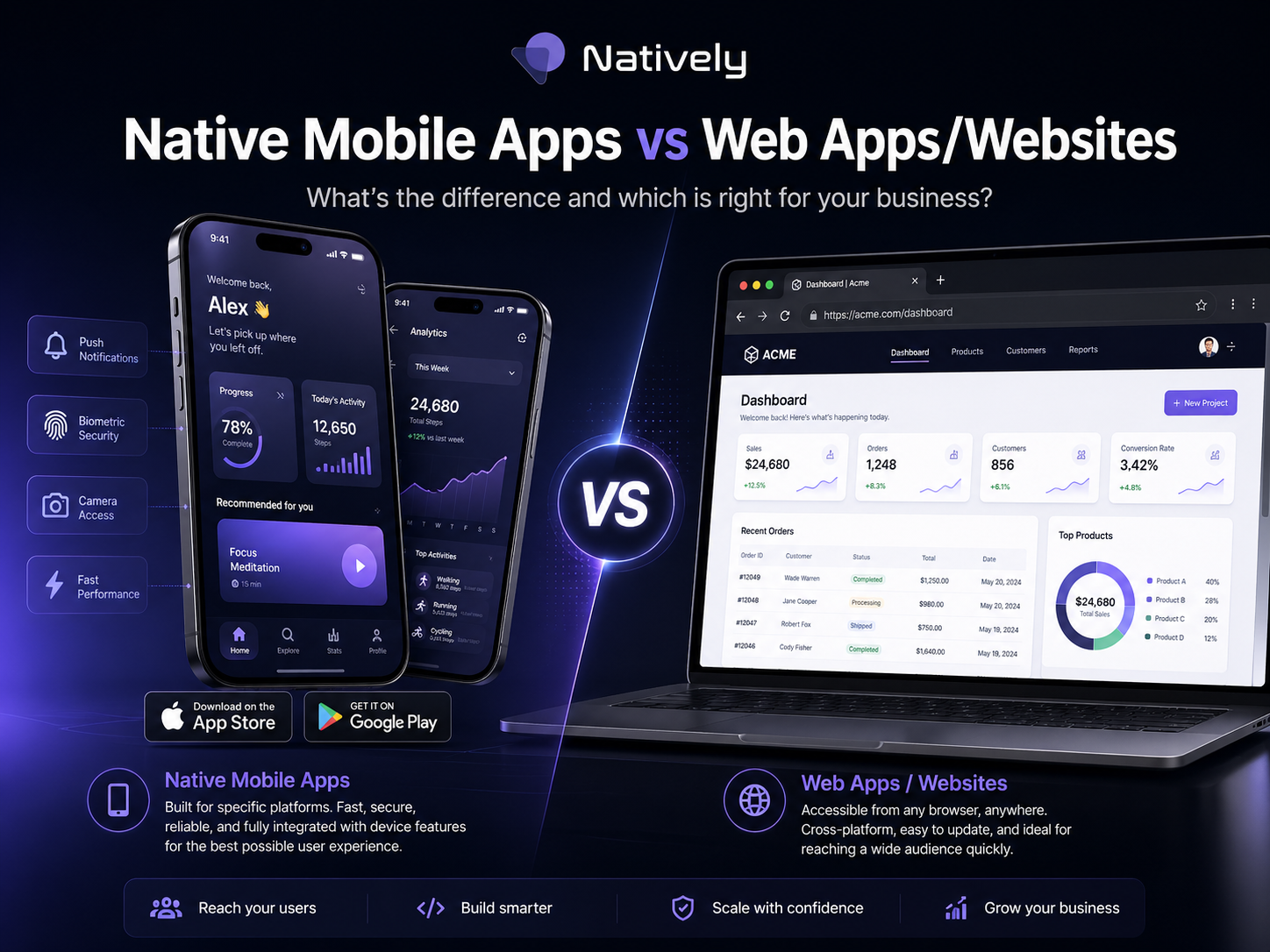
However, if your priority is stronger mobile engagement, better device integration, and a more polished user experience, a native mobile app has clear advantages. Web apps and websites are useful, but they still operate inside the limits of a browser. Native mobile apps live directly on the user’s device, appear on the home screen, and can connect more deeply with mobile features such as push notifications, camera access, location, biometrics, and more.
That is why many businesses are now looking for ways to turn their existing website or web app into a mobile app without rebuilding everything from scratch.
What Is a Web App or Mobile Website?
A web app or mobile website is accessed through a browser such as Safari, Chrome, or Firefox. Users usually open it by typing a URL, clicking a link, or finding it through search engines.
This makes web apps easy to access and simple to update. If you change something on your website, users usually see the latest version immediately. For many businesses, this is a major advantage.
The limitation is that web apps depend heavily on the browser. They may have restricted access to device features, weaker home-screen presence, and fewer direct ways to bring users back after they leave.
What Is a Native Mobile App?
A native mobile app is installed directly on a device and is designed for mobile operating systems such as iOS and Android. Traditional native apps are usually built with technologies such as Swift or Objective-C for iOS and Kotlin or Java for Android.
A native app can also be created from an existing website or web app using a web-to-app platform. In this model, the website remains the core product, while the app adds a native mobile layer around it. This gives businesses a faster path to the App Store and Google Play, while still allowing them to use native features that improve the mobile experience.
This is where platforms like BuildNatively are valuable: they help businesses convert an existing URL into a mobile app experience without needing to build separate iOS and Android apps from the ground up.
Key Advantages of Native Mobile Apps
1. Stronger Home-Screen Presence
A web app can be forgotten in a browser tab. A mobile app sits directly on the user’s phone, making your brand easier to see, open, and remember. This presence can be especially valuable for SaaS platforms, e-commerce stores, communities, marketplaces, learning platforms, and membership-based businesses.
2. Push Notifications
Push notifications are one of the strongest engagement tools available on mobile. They allow you to send timely updates, reminders, promotions, alerts, and product messages directly to users, even when they are not actively using the app.
3. Better Device Integration
Native mobile apps can connect more naturally with device capabilities such as the camera, GPS/location, biometrics, contacts, QR and barcode scanning, and other native features. These integrations can make the experience feel smoother and more useful than a browser-only website.
4. More Polished User Experience
Users expect mobile apps to feel fast, familiar, and easy to use. Native mobile apps can follow iOS and Android interface patterns more closely, which helps the experience feel natural on each platform.
5. Higher Perceived Trust and Credibility
Having an app published on the App Store and Google Play can increase trust. For many users, a mobile app feels more established and professional than a website alone.
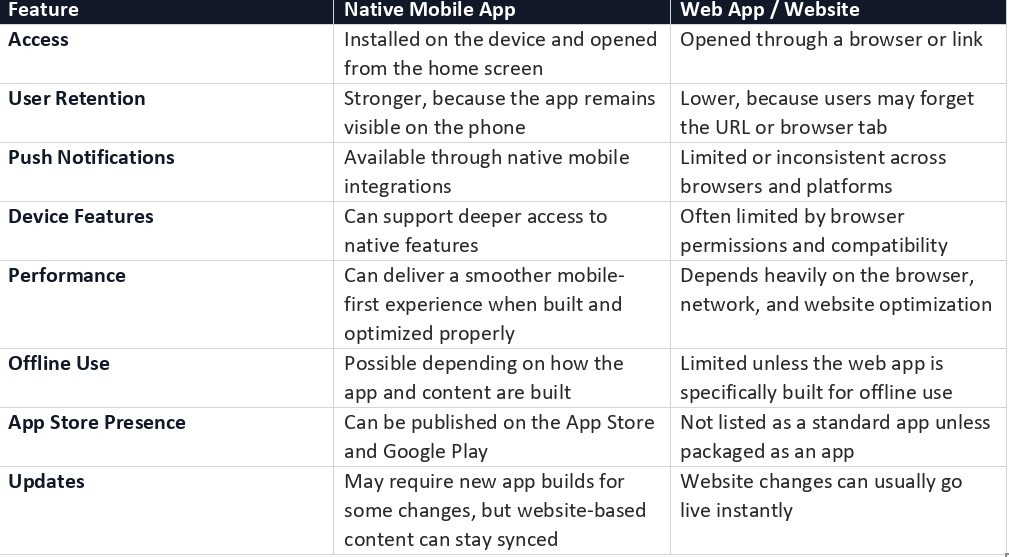
Native App vs Web App: Quick Comparison
When a Web App May Be Enough
A web app may be enough if users only need occasional access, if search traffic is your main acquisition channel, or if your product does not depend on frequent repeat usage.
For example, a simple brochure website, a low-frequency booking page, or a content page may not need a full mobile app immediately. In these cases, improving the mobile version of the website may be the better first step.
When a Native Mobile App Makes More Sense
A native mobile app becomes more valuable when your business depends on repeat engagement, faster access, stronger brand presence, or mobile-specific features.
This is especially true for businesses such as SaaS products, online communities, e-commerce stores, education platforms, marketplaces, delivery services, booking platforms, and membership-based products. If users are expected to come back often, an app gives your business a stronger position on their phone.
How BuildNatively Helps
The biggest challenge with native mobile apps is usually development complexity. Building separate iOS and Android apps from scratch can be expensive, time-consuming, and difficult to maintain.
BuildNatively solves this problem by helping businesses convert an existing website or web app into a mobile app for iOS and Android without coding. Instead of starting from zero, you can use your current URL as the foundation and add mobile-native functionality where it matters.
- Convert an existing website or web app into a mobile app
- Create apps for iOS and Android without hiring separate native development teams
- Add mobile features such as push notifications, location, camera access, biometrics, QR/barcode scanning, contacts, deep links, and other native integrations
- Test the mobile experience before publishing
- Publish your app on the App Store and Google Play
- Keep your website and app experience connected, so your business remains easier to manage
This makes BuildNatively a practical option for businesses that want the benefits of a mobile app without the cost and complexity of traditional native development.
Final Thoughts
Web apps are flexible, accessible, and easy to update. They are still an important part of most digital businesses. But when your goal is to build stronger user engagement, increase repeat visits, improve mobile experience, and create a more permanent brand presence, a native mobile app offers clear advantages.
A mobile app is more than another interface. It is a direct connection to your users, visible on their home screen and available whenever they need it.
If you already have a website or web app, you may not need to rebuild everything from scratch. With BuildNatively, you can turn your existing URL into a mobile app and bring your business closer to your users on iOS and Android.
Ready to turn your website into a mobile app? Create your iOS and Android app with BuildNatively and bring your business directly to your users’ phones.